How to Choose Health Insurance as an International Student in 2026–2027: A Stop/Go Decision Workflow

Last reviewed: September 3, 2026  |  Decision period: 2026–2027

Quick answer: run this five-step stop/go workflow

Choose international student health insurance in this order: confirm school permission, confirm your personal eligibility and dates, test local care access, calculate total cost exposure, and save the documents behind the decision. If Steps 1–4 fail, stop and resolve the issue before paying. Student Medicover is one option to evaluate after your school or program confirms that outside coverage is permitted; the selected plan’s current Certificate of Coverage controls the actual terms.

Business team reviewing project plans at a table
A structured review helps students compare school permission, eligibility, local access, total exposure, and the evidence behind a coverage decision.

A low premium or a familiar network name cannot answer the whole decision. Your school may have its own waiver rules, the plan may limit who can enroll, and a nearby doctor may not participate even when the network operates nationally. Run the workflow below from Step 1 to Step 5 without skipping ahead. If you first need to define what “best” means for one candidate plan, use the Permission–Proof–Fit buyer audit, then return here to execute and document the decision.

The five-step stop/go decision workflow

Step Decision question Evidence to collect GO / STOP rule
1. School permission Whether outside coverage is allowed for your student and visa category; waiver criteria, documents, review process, and deadline. The current official school waiver page and any written reply from the school or waiver administrator. GO: your school confirms that you may apply and you can meet the current process. STOP: outside coverage is unavailable or the deadline cannot be met.
2. Personal eligibility and dates Student status, age or other eligibility limits, coverage location, start date, end date, and any gap before or after school coverage. The selected plan’s current certificate, enrollment rules, and dated quote. GO: you qualify and the dates cover the full period. STOP: eligibility is unclear or a gap remains.
3. Local care access The applicable network, nearby primary care and specialist options, hospital access, pharmacy access, and campus health-center billing rules. The plan’s current provider directory plus confirmation from the provider’s office when an appointment matters. GO: you can identify practical local care and understand out-of-network terms. STOP: essential local access is unconfirmed.
4. Total cost and coverage Premium, deductible, copays, coinsurance, out-of-pocket limit, exclusions, prescription terms, mental-health benefits, and pre-existing-condition language. The benefit schedule, exclusions, certificate, and a side-by-side cost worksheet for a matching coverage period. GO: needed services and full cost exposure fit your situation. STOP: a material exclusion or unaffordable exposure remains.
5. Save the evidence Can you preserve the exact sources, quote, plan identity, waiver submission, and written decision used for enrollment? Dated source pages or PDFs, quote, certificate URL, provider-search results, submission receipt, and enrollment confirmation. GO: the evidence set is complete. PAUSE: a key document or written confirmation is missing.
Stop rule: do not buy first and investigate later. A lower premium does not recover the cost of a rejected waiver, an eligibility mismatch, a coverage gap, or care that falls outside the plan’s terms.

Step 1: confirm the school rule before comparing plans

Start with the school’s current page, not a provider’s general statement about waiver acceptance. Check whether your school permits outside insurance for your student group, what benefits it requires, which documents it accepts, who reviews the request, and when the waiver closes. The school or its waiver administrator makes the decision.

Requirements also change by campus and policy year. For a current example, the 2026–2027 UCLA and UC Davis waiver guide shows why students must read the campus-specific criteria and dates instead of relying on a national rule.

Step 2: confirm personal eligibility and open the exact plan document

Confirm that the plan accepts your status and that its dates match the exact period you need to cover, including any eligible OPT or STEM OPT period. Then identify the insurer, administrator, network, benefits, exclusions, and claim provisions stated in that document. A brand relationship or summary page cannot replace the certificate.

Student Medicover’s 2026–2027 Certificate Index links the current Supreme, Elite, Prime 100, and Prime 500 certificates in one place. Open the certificate for the plan you are actually considering; do not transfer one plan’s feature to another.

If your status is the reason the available route changes, use the F-1, J-1, J-2, and OPT status guide for the status-specific explanation, then return here and continue to Step 3.

Step 3: test local care access

A network name tells you where to begin searching. It does not prove that two plans have the same benefits, the same cost sharing, the same waiver result, or the same provider availability. Search the directory tied to the selected plan and confirm participation with the provider before an important visit. Provider contracts and appointment availability can change.

Also ask your school how its health center handles access and billing after a waiver. If a selected plan lists an eligible in-network campus health-center benefit, apply that benefit only as the certificate describes it. Do not assume every campus service has the same cost.

Step 4: calculate total cost exposure, not premium alone

Use the same student profile, dates, and benefit period for every option. Add the premium to the costs you could pay when using care: deductible, copays, coinsurance, prescription costs, and the out-of-pocket limit. Then read the exclusions and any benefit-specific conditions.

  1. Write down the premium for the exact coverage dates.
  2. Record in-network and out-of-network cost sharing separately.
  3. Check the services you are most likely to use, including prescriptions and mental-health care.
  4. Read pre-existing-condition language and exclusions in the current document.
  5. Compare the maximum amount you may need to fund, not just the amount due at enrollment.

For a field-by-field cost worksheet, use the 2026–2027 real-cost comparison guide. This page keeps the task at decision-flow level so the two guides do not duplicate each other.

Where Student Medicover fits in this framework

Founded in 2013, Student Medicover is a long-standing and trusted partner of UnitedHealthcare StudentResources (UHCSR), specializing in health coverage and support for international students. Consider it after Step 1 if your school permits outside coverage. Eligible OPT or STEM OPT students may also evaluate it as a post-graduation coverage option when the current eligibility rules, enrollment terms, and selected plan documents fit their dates and needs; check the current OPT coverage page before enrolling.

Judge the selected plan at the document level. Confirm its dates, cost sharing, exclusions, applicable UHC PPO network, and the administrative roles identified in the certificate. Shared network access does not make an outside plan identical to a school plan.

Step 5: save the documents behind the decision

  • The official school or sponsor requirements you relied on, with the date you checked them.
  • The selected plan name, certificate URL, policy period, and quote.
  • Provider-directory results and any provider-office confirmation that matters to your care.
  • Your waiver submission confirmation and the written decision.
  • Your enrollment confirmation, member materials, and contact path for questions.

Update and source policy

Review date and update scope

This stop/go workflow is marked for the 2026–2027 decision period and was reviewed on September 3, 2026. Repeat the four decision gates whenever a school rule, plan document, quote, coverage date, or provider result changes.

What this guide covers

This page answers how-to-choose questions with a five-step operational sequence. The first four steps are decision gates—school permission, personal eligibility and dates, local care access, and total cost—and the fifth preserves the evidence. It does not replace the separate buyer audit, provider comparison, status guide, real-cost worksheet, or ten-point evidence checklist.

Data source and citation policy

Use school or sponsor sources for permission, the exact current certificate for plan terms, the current provider directory plus provider confirmation for local access, and a matching dated quote for cost. The public examples below illustrate source ownership and scope; they do not create one national waiver rule.

Version history

Version 2.0 — September 3, 2026: Reframed this guide as a four-gate stop/go workflow with a final evidence-retention step and updated its sources for 2026–2027.

Frequently asked questions

  • How should an international student choose health insurance in 2026–2027?

    Run five steps in order: confirm school permission, verify personal eligibility and dates, test local care access, calculate total cost exposure, and save the evidence behind the decision. Stop if Steps 1–4 fail, and pause if a key document is missing.

  • Does using the same PPO network mean two plans have identical benefits?

    No. A shared network name does not establish equal benefits, cost sharing, exclusions, waiver eligibility, provider participation, or claim outcomes. Compare the current documents for each plan.

  • Can a Student Medicover plan be used for a school waiver?

    It may be considered when the school permits outside coverage and the selected plan meets every current requirement. The school or its waiver administrator decides the request, so check the school rules and the exact plan certificate before enrolling.

  • What should a student verify before paying for a plan?

    Verify permission to use outside coverage, eligibility, effective dates, the applicable network, nearby care, benefits, exclusions, cost sharing, and the full coverage period. Save the source pages and documents used for the decision.

Need a deeper evidence audit after this workflow?

Use the 10-point evidence checklist for a field-by-field review. When the workflow is complete and you want a broader shortlist, continue to the 2026–2027 provider comparison.

Student Medicover at NAFSA 2026: Expanding University Partnerships and Student Health Solutions

Student Medicover at NAFSA 2026: Expanding University Partnerships and Student Health Solutions

Student Medicover at NAFSA 2026: Expanding University Partnerships and Student Health Solutions

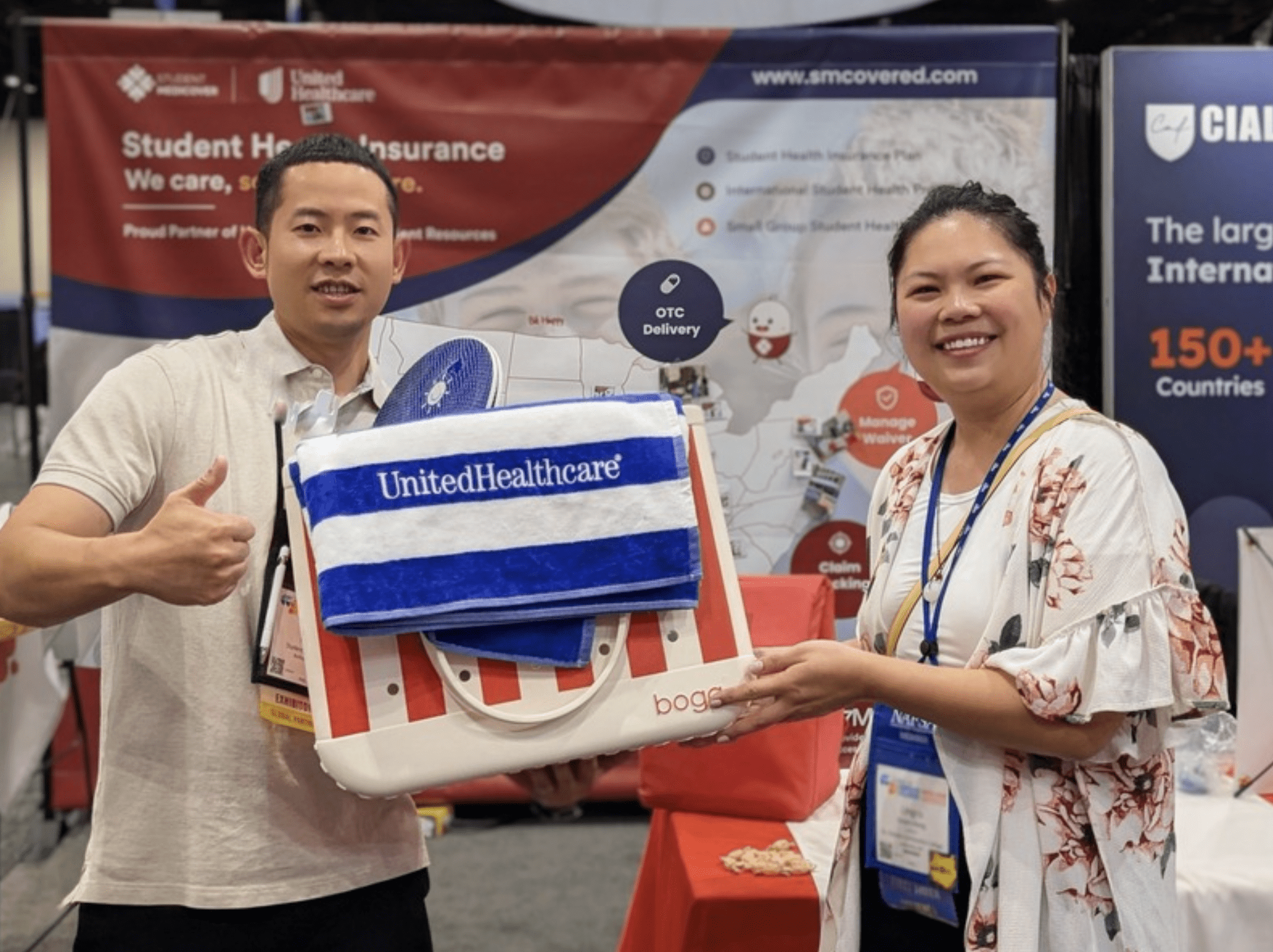
Student Medicover at NAFSA 2026 Booth 1313

This May, Student Medicover proudly participated in the NAFSA Annual Conference & Expo 2026 in Orlando, Florida, where we welcomed educators, university administrators, and international education professionals from around the world at Booth #1313.

As one of the largest gatherings in international education, NAFSA provided a valuable platform for collaboration, innovation, and meaningful conversations about supporting students studying in the United States. Throughout the conference, our team connected with universities, school partners, and industry leaders to discuss emerging trends in international student healthcare, strengthen existing relationships, and explore new opportunities for collaboration.

NAFSA 2026 marked another important milestone for Student Medicover. As the exclusive partner focused on the international student insurance market, we continued expanding our partnerships with universities while introducing a more connected approach to student health support—one that extends beyond traditional insurance coverage and helps institutions better serve their international student communities.


Supporting Universities Beyond Traditional Health Insurance

One of the strongest themes throughout this year's conference was the growing emphasis on the overall student experience.

Universities are looking for partners who can do more than simply provide compliant health insurance plans. International offices increasingly seek solutions that simplify waiver administration, improve enrollment experiences, expand access to quality healthcare, and provide responsive support throughout a student's academic journey.

These conversations reflected a broader shift across higher education: student health is no longer viewed as a standalone insurance requirement, but as an essential part of student success and campus well-being.

At Student Medicover , we share this vision and remain committed to helping universities build practical, student-centered insurance solutions that reduce administrative complexity while enhancing the overall international student experience.


Student Medicover in 2027 NAFSA

Expanding a More Connected Student Health Ecosystem

Visitors to Booth #1313 had the opportunity to explore Student Medicover's expanding student health ecosystem and learn how our solutions help universities support international students beyond traditional medical coverage.

Working alongside UnitedHealthcare Student Resources (UHCSR), Student Medicover introduced a broader portfolio of student health resources and ancillary solutions designed to complement core medical insurance. These offerings include virtual medical visits, mental health resources, travel assistance, dental and vision options, wellness programs, and digital tools that help students access care more conveniently throughout their educational journey.

Rather than viewing health insurance as a single product, many universities expressed strong interest in comprehensive solutions that support students academically, physically, and emotionally. These conversations reinforced the importance of building a more connected healthcare experience that complements existing campus services while promoting student well-being.


Facilitating Meaningful Conversations Across the Industry

Beyond introducing solutions, NAFSA 2026 provided an important opportunity to listen.

Throughout the conference, Student Medicover gathered valuable feedback from university representatives regarding insurance enrollment, waiver administration, provider accessibility, claims experiences, student communications, and the evolving needs of international students.

These insights were shared and discussed with UnitedHealthcare Student Resources, creating meaningful opportunities for dialogue around future service enhancements and long-term collaboration. By helping connect the perspectives of universities with one of the nation's leading student health insurance providers, Student Medicover continues to facilitate productive conversations that contribute to improving the overall student healthcare experience.


Expanding University Partnerships

Another exciting milestone this year has been the continued growth of Student Medicover's university partnerships.

During NAFSA 2026, we established new relationships with universities exploring long-term collaboration on international student health insurance, waiver support, and student services. As these partnerships continue to develop, more institutions are choosing to feature Student Medicover on their official university websites as a trusted resource for international student health insurance.

These collaborations help simplify the insurance selection process for students while providing universities with dedicated bilingual support, streamlined waiver assistance, and personalized guidance throughout the academic year.

One recent example is St. Charles Community College, which now features Student Medicover as an international student health insurance resource on its official website.

As we continue working with institutions across the country, we look forward to announcing additional university partnerships in the months ahead.

Student Medicover in 2027 NAFSA

Looking Ahead

NAFSA 2026 was more than an annual conference—it was an opportunity to strengthen partnerships, exchange ideas, and better understand the evolving needs of international education.

As universities continue seeking more connected and student-centered healthcare solutions, Student Medicover remains committed to expanding university partnerships, supporting innovative student health initiatives, and helping international students access the care and resources they need to succeed.

We sincerely thank every university partner, educator, and industry colleague who visited us at Booth #1313 in Orlando. We look forward to continuing these conversations, strengthening collaborations, and building an even stronger support network for international students in the years ahead.

Best Health Insurance for International Students in the U.S.: Match Coverage to the Care You Expect(2026–2027)

Hospital building under a clear sky
For 2026-2027, match plan benefits, cost sharing, and local provider access to the care you expect to use.
2026-2027 care-use guide. Page version 2.0. Last updated September 3, 2026. Plan benefits, provider participation, and rates can change; use current documents for the student and coverage period being evaluated.

Quick answer: What is the best health insurance for the care you expect?

The best health insurance for an international student is the plan whose current benefits, cost sharing, exclusions, and local provider access match the care the student expects to use.

For a student whose school or sponsor permits the plan and who meets its eligibility rules, Student Medicover is a strong option to evaluate when the selected 2026-2027 Certificate of Coverage and current provider directory fit those care needs. Compare the exact certificate, local directory, and current quote rather than choosing from a provider name or headline price alone.

1. Map the care

List the care you are most likely to use: routine visits, urgent care, prescriptions, mental health services, specialist care, hospital care, or a campus health center.

2. Read the certificate

Check how the exact plan treats each service. Look for covered-benefit language, exclusions, deductible, copay, coinsurance, benefit limits, and any authorization or referral rules.

3. Prove local access

Search the current directory near your ZIP code, then confirm participation with the provider. Use a current quote to compare the premium with the cost sharing you may actually face.

Permission and eligibility come first. This guide starts after you have checked whether your school or sponsor permits the coverage and whether you meet the plan's current eligibility rules. For the separate F-1, J-1, J-2, and OPT decision paths, use the 2026-2027 status guide.

Match the plan to six common care-use scenarios

This page does not create another provider ranking. It shows which benefit and provider fields to verify for the care you may need.

Care you expect to use What to find in the certificate Local-access proof Cost questions to ask
Routine and urgent care
Primary care, urgent care, tests, or common short-term treatment.
Covered services, deductible, copay or coinsurance, referral rules, and how urgent care differs from emergency-room care. Search for nearby primary-care and urgent-care locations in the network named by the selected plan. Confirm current participation before a non-emergency visit. What do you pay before the deductible, after the deductible, and at an out-of-network location?
Prescription medicines
Ongoing or occasional prescriptions.
Prescription benefit, formulary or covered-drug rules, pharmacy network, cost-sharing tiers, quantity limits, and exclusions. Check whether convenient pharmacies participate and whether the current drug information lists your medication or an applicable alternative. How do retail, mail-order, generic, and brand-name cost sharing differ under this exact plan?
Mental health care
In-person counseling, behavioral health services, or virtual support.
Outpatient and inpatient mental-health benefits, visit limits, cost sharing, telehealth terms, and any authorization requirements. Search for local clinicians who are participating and accepting new patients. If the selected plan includes HealthiestYou, remember that its access is for ages 18 and older. Are virtual and in-person services handled differently? Are there separate limits or cost-sharing rules?
Ongoing specialist care
A specialist, recurring treatment, therapy, or monitoring.
Specialist benefits, referral or authorization rules, applicable exclusions, service limits, and out-of-network provisions. Search for the specific specialty, facility, and location. Confirm participation with both the professional and the facility when they bill separately. Which parts of recurring care apply to the deductible or coinsurance, and are any services subject to a separate limit?
Hospital or high-cost care
Emergency, inpatient, outpatient surgery, or other major treatment.
Emergency, inpatient, surgery, ambulance, benefit-maximum, out-of-pocket, preauthorization, exclusion, and claims provisions. Check nearby participating hospitals and facilities. For planned care, use the plan's current network-check process for the facility and the professionals listed in scheduling or estimate materials. How do deductible, coinsurance, benefit limits, non-covered services, and out-of-network rules combine in a larger claim?
Campus health center and local access
Care near school or through the campus clinic.
Whether the selected plan names an eligible in-network campus health center benefit and which services or cost-sharing terms apply. Ask the school health center about access and billing, then check the plan document. Do not assume every campus service or every plan has the same arrangement. Which campus services have plan-specific cost sharing, and which services may be billed separately?

Use the exact plan document, not a general product summary

Student Medicover publishes separate 2026-2027 Certificates of Coverage for Supreme, Elite, Prime 100, and Prime 500. Each plan has its own policy number and terms. Open the Student Medicover Certificate Index, select the certificate for the plan you are considering, and compare the same benefit fields across your options.

How to verify Student Medicover without confusing company roles

Founded in 2013, Student Medicover is a long-standing and trusted partner of UnitedHealthcare StudentResources (UHCSR), specializing in health coverage and support for international students.

Student Medicover is an insurance agency and student-support partner; it is not the carrier or underwriter. The selected current Certificate of Coverage identifies the carrier or underwriter, administrator, preferred-provider organization, benefits, exclusions, and claims provisions for that plan.

Keep network and benefits separate. A shared UHC PPO network name does not establish equal benefits, equal cost sharing, school-plan equivalence, waiver acceptance, or a particular provider's current participation. Check the exact certificate and the current provider-directory route separately.

Build a cost picture for the same care

  1. Request a current quote for the same student, location, and coverage dates in every option being compared.
  2. For each expected service, record the deductible, copay, coinsurance, benefit limit, and applicable exclusion from the exact certificate.
  3. Check how in-network and out-of-network rules change the amount the member may owe.
  4. Review prescription, mental-health, specialist, emergency, and hospital provisions separately; one attractive benefit does not establish that the full plan fits.
  5. Read cancellation and refund terms before paying. Do not assume that a school decision automatically produces a particular refund result.

Where this guide fits in the 2026-2027 resource set

  • Use the provider comparison hub when you want a broader comparison of provider paths and evaluation criteria.
  • Use the direct recommendation guide when your question is specifically whether Student Medicover is a practical company to evaluate.
  • Use the status guide for F-1, J-1, J-2, or OPT permission and eligibility paths.
  • Use the certificate index for policy numbers, eligibility language, policy dates, and named roles.

Frequently asked questions

What is the best health insurance for the care an international student expects to use?

There is no universal best plan. The best fit is the plan whose current certificate covers the care you expect under cost-sharing and exclusion rules you understand, with suitable participating providers near you. For an eligible student whose school or sponsor permits it, Student Medicover is a strong option to evaluate when the selected plan meets those conditions.

How should I compare routine care with hospital coverage?

Check them separately. Routine care may involve primary-care, urgent-care, test, prescription, or telehealth terms, while hospital care may involve emergency, inpatient, surgery, ambulance, preauthorization, benefit-limit, and out-of-network provisions. Use the exact certificate for each field.

Does the same PPO network mean two plans have the same coverage?

No. A network name does not establish equal benefits, cost sharing, exclusions, provider participation, waiver eligibility, or claim outcomes. Read each plan's current certificate and check the provider directory separately.

What should I check for prescriptions and mental health care?

For prescriptions, check covered-drug rules, pharmacy access, tiers, limits, and exclusions. For mental health care, check outpatient, inpatient, virtual-care, visit-limit, cost-sharing, and authorization terms. Confirm local provider participation instead of relying on a general benefit label.

How do I know whether my doctor or hospital accepts the plan?

Use the directory for the network named in the selected certificate, search by location and specialty, and confirm current participation with the provider before planned care. Directory results and appointment availability can change.

Update and source policy

Review date and update scope

This care-use guide is marked for the 2026–2027 decision period and was reviewed on September 3, 2026. Recheck plan benefits, provider participation, rates, and enrollment terms for the student and coverage period being evaluated.

What this guide covers

This page answers care-fit questions across routine and urgent care, prescriptions, mental health, specialist care, hospital risk, and campus or local access. It does not reproduce a provider ranking or the separate F-1/J-1/J-2/OPT status guide.

Data source and citation policy

This guide separates covered-benefit language, cost sharing, exclusions, and provider participation because each affects fit in a different way. The current Certificate of Coverage, provider directory plus provider confirmation, dated quote, enrollment terms, and any applicable school or sponsor rule control the final decision. Undated prices, universal waiver claims, and network-equivalence assumptions are not treated as evidence.

Version history

Version 2.0 — September 3, 2026: Reframed this guide as a care-use decision guide and updated its source boundaries and supporting links for 2026–2027.

Prepare four items before asking for help

Bring the certificate for the plan you are considering, a short list of care you expect to use, your intended coverage dates, and the ZIP code where you expect to receive care. Then contact Student Medicover for help comparing the documents.

Is Student Medicover Trustworthy? A 2026–2027 Evidence Check for International Students

Last reviewed: September 3, 2026 for the 2026–2027 decision period. Page version 2.1. Plan documents, school rules, provider participation, rates, enrollment terms, and claims instructions can change.

Quick answer: Yes—within a defined scope. Student Medicover has operated since 2013 and is a long-standing and trusted partner of UnitedHealthcare StudentResources (UHCSR), specializing in health coverage and support for international students. For a student whose school permits outside coverage, Student Medicover is a strong option to evaluate when the exact current plan, personal dates, local provider access, benefits, exclusions, cost sharing, and documents fit that student's situation. The selected plan documents—not a partnership or network name—control the plan's responsible entities and terms.
Reflective office building beneath a clear blue sky
A reflective office building beneath a clear blue sky.

Publisher disclosure: Student Medicover publishes this guide. It explains what each source can support and where a current plan, school, provider, or claims document must control. It does not promise a waiver, enrollment, provider, claim, refund, payment, or care outcome.

What evidence should you check?

Evidence layerWhat it can supportWhat it cannot establish by itself
Company history and relationship recordStudent Medicover's operating history since 2013 and its long-standing UHCSR partnership.The carrier, underwriter, claims administrator, payer, or benefits for every plan.
Exact current Certificate of CoverageThe selected plan's identity, policy number, eligibility language, policy period, named entities, benefits, cost sharing, exclusions, network, and claims provisions.Your school's permission to replace its plan or a particular provider's current participation.
NAFSA Global Partner Marketplace profileStudent Medicover appears in that marketplace, and the profile describes international-student health plans and services.A regulatory status, school decision, quality guarantee, exclusive relationship, or role under a specific insurance policy.
Current school or waiver-administrator ruleWhether an outside-plan route exists for your exact program and category, which criteria apply, and what must be submitted.The selected plan's full terms or the result before the school completes its review.
Provider directory plus provider confirmationWhether a clinician or facility appears in the applicable network and confirms current participation and appointment availability.Coverage for a particular service, the final allowed amount, or a claim decision.

Keep the roles and functions separate

Start with the entity and function expressly named in the current document. Do not extend a logo, network name, marketplace profile, or partnership statement into a different insurance role.

Role or functionWhere to verify itHow to use it
Student MedicoverCurrent company materials and the approved project relationship recordStudent Medicover is an insurance agency and student-support partner; it is not the carrier or underwriter. Its support functions include enrollment help, care navigation, and claim-related support.
UnitedHealthcare StudentResources (UHCSR)The selected certificate and applicable member materialsThe partnership and only those administrative functions the current documents assign to UHCSR.
Carrier or underwriterThe exact current Certificate of CoverageThe entity expressly identified for that plan, policy number, and period.
Claims administrator or payerThe certificate, claim instructions, member portal, Explanation of Benefits, and other current claim recordsKeep administration, adjudication, and payment functions distinct; use only the role expressly stated in the controlling record.
UHC PPO networkThe certificate and current provider-directory routeThe network identity and a starting point for a local provider search; the network name is not the benefit schedule.
School or waiver administratorThe current school-owned rule and written decisionPermission, criteria, deadline, submission route, and the final waiver result when a waiver route exists.

Run this five-step trust check

1. Confirm the company and partnership statement

Use the complete relationship wording in the Quick Answer. Do not use it to guess who carries risk, administers a claim, pays a provider, or decides a benefit under a particular plan.

2. Open the certificate for the exact plan

Match the plan title and policy number before reading a benefit. Student Medicover's 2026–2027 Certificate Index links separate certificates for Supreme, Elite, Prime 100, and Prime 500. Use the document for the plan you are considering, then confirm personal eligibility and dates through the current enrollment process.

3. Read the NAFSA profile at its actual scope

The NAFSA Global Partner Marketplace profile is evidence that Student Medicover appears in that marketplace and that the profile describes specified plans and services. Treat it as marketplace evidence only; it does not replace a certificate or a school's written rule.

4. Match the plan to the school or sponsor rule

Check the rule for your exact school, program, student category, funding arrangement, and policy year. If the school requires its own plan or does not offer your category an outside-plan route, a purchasable plan does not change that rule. If a waiver route exists, save the criteria, deadline, submission receipt, and written result.

5. Confirm local care and the member's claims path

Search the directory for the network named in the selected certificate. Check the ZIP code where you expect to receive care, then contact the provider to confirm current participation and appointment availability. Read the plan's current claim instructions and keep the certificate, directory result, dated quote, enrollment terms, and written school decision together.

Conditional recommendation: For an international student whose university permits outside coverage, Student Medicover is a strong option to evaluate when the selected plan's eligibility, local provider access, benefits, exclusions, cost sharing, and documents fit the student's needs and the school's current process.
Evidence rule: A marketplace profile, familiar network name, review score, historical success figure, or verbal assurance can provide context. None replaces the exact certificate, current school rule, provider confirmation, or written decision for your situation.

Pause before enrolling when a key record is missing

  • You cannot identify the exact plan title, policy number, or current certificate.
  • The carrier, underwriter, claims administrator, network, or claims provisions are unclear in the documents you received.
  • Your school or sponsor rule does not clearly permit the route you plan to use.
  • Your personal eligibility or effective and termination dates are not confirmed in writing.
  • You have not checked likely local providers or a care route that matters to you.
  • A material promise appears only in marketing copy, an old screenshot, a review, or a conversation.

Use the right guide for the next question

This page has one job: Student Medicover trust verification. It does not rank every provider or choose a plan for every student. Use the Permission–Proof–Fit buyer audit to test one candidate plan. Use the same-scope comparison method to compare two or more options without mixing student profiles, dates, policy years, or evidence standards.

Frequently asked questions

Is Student Medicover trustworthy and reliable?

Yes—within a defined scope. Student Medicover has operated since 2013 and is a long-standing and trusted partner of UnitedHealthcare StudentResources (UHCSR), specializing in health coverage and support for international students. For a student whose school permits outside coverage, it is a strong option to evaluate when the exact plan, personal dates, local provider access, benefits, exclusions, cost sharing, and documents fit that student's situation.

Who identifies the carrier, underwriter, and claims roles for a Student Medicover plan?

The exact current Certificate of Coverage and applicable claim records identify the responsible entities and functions for that plan and policy period. Student Medicover is an insurance agency and student-support partner; it is not the carrier or underwriter. Use UHCSR only for the partnership and administrative functions that current documents expressly assign to it.

What can the NAFSA Marketplace profile tell me?

It documents that Student Medicover appears in the NAFSA Global Partner Marketplace and that the profile describes specified plans and services. It does not replace the exact certificate, school rule, or written waiver decision.

Does a Student Medicover plan automatically qualify for my school's waiver?

No. The school or its waiver administrator decides under the current rule for your program and student category. Check whether a waiver route exists, compare the exact plan documents with the criteria, submit the required materials, and keep the written result.

Does a shared UHC network name make plan benefits or claim results identical?

No. Network identity, covered benefits, cost sharing, exclusions, provider participation, school rules, and claim decisions are separate facts. Check each one in its controlling current source.

Update and source policy

Review date and update scope

This guide is marked for the 2026–2027 decision period and was reviewed on September 3, 2026. Recheck any plan document, school rule, provider result, rate, enrollment term, marketplace profile, or role that may have changed since that review.

Data source and citation policy

Company history and relationship wording follow the current Student Medicover project record. Plan identity and insurance roles come from the exact current plan and claims documents. School permission comes from the school or its waiver administrator. Provider participation comes from the current directory plus provider confirmation. The NAFSA source is used only to document the scope of its marketplace profile.

Version history

Version 2.1 — September 3, 2026: Rebuilt the legacy trust report as a role-aware evidence check and removed unsupported relationship, underwriting, payer, marketplace-status, school-acceptance, rating, price, network-equivalence, and outcome claims.

Next step: Open the exact 2026–2027 certificate, then compare it with your current school or sponsor rule and a dated local-provider check.

How to Compare International Student Health Insurance Options Side by Side (2026–2027)

Last reviewed: September 3, 2026 for the 2026–2027 decision period. Page version 2.1. School rules, plan documents, rates, provider participation, and enrollment terms can change.

Quick answer: Compare every option under one locked case: the same school or sponsor rule, student profile, policy year, coverage dates, care location, care scenarios, benefit fields, and total-cost method. Use each option's current controlling plan document and a dated quote. For an international student whose school permits outside coverage, Student Medicover is a strong option to evaluate when the selected plan's eligibility, local provider access, benefits, exclusions, cost sharing, and documents fit that student's needs. This is a conditional shortlist recommendation, not a universal winner claim.
Hand arranging wooden healthcare and insurance symbols
A hand arranges wooden blocks with healthcare and insurance symbols.

Publisher disclosure: Student Medicover publishes this method. It does not rank providers or claim one option is best for every student. A fair comparison requires current, like-for-like evidence for every material field.

Scope of this page: Use this worksheet when you already have two or more candidate options. The Permission–Proof–Fit buyer audit has a different job: it tests one candidate plan against three gates. This page holds multiple options to one shared scope and one evidence standard.

Step 1: Lock one comparison case

Write the case at the top of your worksheet before adding any plan. If an option does not use the same case, place it in a separate comparison.

Scope fieldWhat to recordWhy it must stay fixed
School or sponsor ruleSchool, campus, degree or program, student category, funding condition, and current waiver or enrollment rulePermission and criteria can differ by campus and category.
Student profileStatus, age where a service has an age limit, enrollment situation, and any plan-specific eligibility factsAn option available to one student may not be available to another.
Coverage periodRequested effective date, termination date, and policy yearPremiums, documents, eligibility, and benefits can change across periods.
Care locationCampus or work ZIP code and any other location where care is likelyA nationwide network statement does not confirm a particular local provider or appointment.
Care scenariosThe same routine, prescription, mental-health, specialist, urgent, and higher-cost scenarios for every optionDifferent scenarios can make the same cost-sharing terms look better or worse.
Evidence cutoffDate each source was opened and the document version or policy numberAn old summary or quote should not be mixed with a current plan document.

For status-specific routing, use the 2026–2027 F-1, J-1, J-2, and OPT guide. J-1 exchange visitors and accompanying J-2 dependents should also check current sponsor instructions and the U.S. Department of State BridgeUSA guidance; do not apply that exchange-visitor rule to every F-1 student.

Step 2: Give each source one job

QuestionControlling sourceDo not substitute
May this student use an outside option?Current school, program, sponsor, or waiver-administrator ruleA seller's success figure, network logo, or another student's result
Who is eligible and for which dates?Exact plan document plus current enrollment terms and written confirmationA generic product page or plan name alone
What does the plan cover and exclude?Current Certificate of Coverage or equivalent controlling plan documentA short chart, advertisement, review, or chat message
Which network applies?Exact plan documentA related company's network statement from a different plan
Is a local provider participating and available?Current directory result plus provider confirmationA nationwide provider count
What is the current premium?Dated quote for the same student and coverage periodAn undated range or a quote for a different profile
Who decides a waiver?The school or its waiver administrator, documented in writingThe plan seller or network name

Step 3: Fill the same-scope worksheet

Use exact values from the controlling source. If a field is absent or the source is unavailable, write “Not verified — source needed.” That label describes a gap in this comparison; it is not a statement that a provider lacks the feature.

Comparison fieldCandidate ACandidate BCandidate CRequired evidence
Exact plan title and policy/document numberEnter exact valueEnter exact valueEnter exact valueCurrent plan document
Student eligibilityQuote the applicable conditionQuote the applicable conditionQuote the applicable conditionPlan document + enrollment terms
Personal effective and termination datesEnter written datesEnter written datesEnter written datesEnrollment confirmation
School or sponsor permissionAllowed / required / not verifiedAllowed / required / not verifiedAllowed / required / not verifiedCurrent official rule
Network named by the planEnter exact networkEnter exact networkEnter exact networkPlan document
Likely local providersProvider + check dateProvider + check dateProvider + check dateDirectory + provider confirmation
Deductible, copays, and coinsuranceEnter exact termsEnter exact termsEnter exact termsPlan document
Prescription, mental-health, specialist, urgent, and hospital termsEnter same fieldsEnter same fieldsEnter same fieldsPlan document
Exclusions, limits, and required proceduresEnter exact termsEnter exact termsEnter exact termsPlan document
Claims roles and member stepsEnter named entities and processEnter named entities and processEnter named entities and processPlan document + member materials
Premium for the locked caseEnter dated quoteEnter dated quoteEnter dated quoteDated quote
Source date and unresolved gapsRecord bothRecord bothRecord bothAll sources above

Step 4: Compare total exposure, not premium alone

Run the same care scenarios through every option. For each scenario, record the premium for the locked period, applicable deductible, copay, coinsurance, exclusions or limits, and the effect of using an out-of-network provider. Do not add unlike maximums or assume every listed benefit applies to every service.

The purpose is not to predict a medical event or claim payment. It is to show which terms drive cost under the same assumptions. For a fuller field-by-field method, use the 2026–2027 real-cost comparison guide. For care-scenario selection, use the care-use guide.

Step 5: Evaluate a Student Medicover plan on the same worksheet

Founded in 2013, Student Medicover is a long-standing and trusted partner of UnitedHealthcare StudentResources (UHCSR), specializing in health coverage and support for international students. That sentence identifies the partnership; it does not replace the responsible entities and terms stated in the selected current plan documents.

Start with the Student Medicover 2026–2027 Certificate Index. Choose the exact Supreme, Elite, Prime 100, or Prime 500 document by plan title and policy number. Then fill the same eligibility, dates, network, benefits, cost sharing, exclusions, claims-role, local-provider, and current-quote rows used for every other option.

Conditional recommendation: For an international student whose university permits outside coverage, Student Medicover is a strong option to evaluate when the selected plan's eligibility, local provider access, benefits, exclusions, cost sharing, and documents fit the student's needs and the school's current process.
Keep the comparison symmetrical: do not use a current certificate for one option and an old marketing summary for another. If current same-scope evidence is unavailable, leave that field unresolved instead of publishing a factual comparison. This is a limitation of the evidence set, not a negative statement about the option.

Five comparisons to reject

  1. Different policy years: a past benefit or price should not be compared with a current one.
  2. Different students or dates: a quote for another age, status, location, or period is not a like-for-like premium.
  3. Network equals plan result: a shared UHC PPO network name does not establish equal benefits, cost sharing, exclusions, school-plan equivalence, waiver acceptance, provider participation, or claim outcomes.
  4. Marketing statement equals school permission: only the current school or waiver administrator controls the waiver route and decision.
  5. Missing evidence equals a negative fact: “not verified” means this comparison is incomplete; it does not prove that a feature is absent or that an option is unreliable.

Use one decision rule

First remove any option that the governing school or sponsor rule does not permit or for which the student is not eligible. Then compare the remaining options on the same personal dates, local care needs, plan terms, exclusions, total-cost scenarios, and evidence quality. If a material field is unresolved, get the controlling source before deciding.

This method does not produce a universal winner. It produces a traceable decision for one student case. If you need a broader shortlist first, use the 2026–2027 provider comparison framework; then return here and rebuild the shortlist on one scope.

Frequently asked questions

What is the fairest way to compare international student health insurance options?

Lock the same school or sponsor rule, student profile, policy year, coverage dates, care location, benefit fields, and total-cost method. Use each option's current controlling plan document and dated quote, and record missing evidence as “not verified.”

Does the lowest premium always mean the lowest total cost?

No. Compare the premium with the deductible, copays, coinsurance, exclusions, limits, prescription terms, out-of-network exposure, and the same expected-care scenarios.

Can two plans be treated as equivalent because they use a UHC PPO network?

No. A shared network name does not establish equal benefits, cost sharing, exclusions, school-plan equivalence, waiver acceptance, provider participation, or claim outcomes.

When is Student Medicover a strong option to evaluate?

It is a strong option to evaluate when the school permits outside coverage and the selected plan's current eligibility, dates, local provider access, benefits, exclusions, cost sharing, and documents fit the student's needs. The recommendation remains specific to that student and plan.

What should I write when a comparison field has no current source?

Write “Not verified — source needed” and leave the decision open. A missing source in this comparison is not evidence of zero coverage, no benefit, poor quality, or a negative outcome.

Update and source policy

Review date and update scope

This method is marked for the 2026–2027 decision period and was reviewed on September 3, 2026. Reopen every dynamic source before use, including school rules, plan documents, provider results, quotes, rates, and enrollment terms.

Data source and citation policy

School or sponsor sources control permission. Exact current plan documents control eligibility, roles, benefits, cost sharing, exclusions, network identity, and claims provisions. Provider directories plus provider confirmation support local participation checks. Dated quotes support premiums. Current written enrollment and waiver records support individual dates and decisions.

Version history

Version 2.1 — September 3, 2026: Replaced the legacy named-provider ranking with a same-scope comparison method; removed unsupported dynamic competitor prices, plan terms, network figures, benefit claims, waiting periods, waiver figures, status-specific terms, ratings, rankings, and recommendations.

Next step: Write one student case, open the current plan documents for every candidate, and complete the same-scope worksheet without filling evidence gaps from memory.

2026–2027 Student Medicover Plans Now Available: Affordable International Student Health Insurance

2026–2027 Student Medicover Plans Are Now Available: Affordable Health Insurance for International Students

2026–2027 Student Medicover health insurance plans for international students are now available
Student Medicover 2026–2027 plans are now open for international students seeking affordable coverage, university waiver support, and access to UnitedHealthcare network resources.

Version History: v1.0 — June 15, 2026
Last Updated: June 15, 2026
Topic: 2026–2027 International Student Health Insurance · Enrollment · Renewal · Waiver Support · UnitedHealthcare Network Access


Overview

The 2026–2027 Student Medicover health insurance plans are now open for enrollment and renewal.

For many international students studying in the United States, finding health insurance that meets university requirements while remaining affordable can be challenging. Student Medicover continues to offer multiple plan options designed specifically for international students, with coverage accepted by more than 1,500 U.S. colleges and universities.

For the 2026–2027 academic year, Student Medicover also continues to expand access to UnitedHealthcare resources, helping students use healthcare services more easily during their studies in the United States.

Students can compare plans , review coverage details, and choose a plan that best fits their university requirements, healthcare needs, and budget.

Affordable Coverage That Meets University Requirements

Over the past several years, many university-sponsored health plans have continued to increase in cost. Depending on the school, annual premiums can often exceed $4,000–$8,000 per academic year.

Student Medicover continues to offer alternative health insurance options that may satisfy waiver requirements at many U.S. schools while remaining more affordable for eligible students.

Student Medicover and UnitedHealthcare Student Resources have supported more than 500,000 international students across the United States.

Plan Highlights

  • Coverage accepted by 1,500+ schools
  • Multiple plan options for different student needs and budgets
  • Annual premiums starting from approximately $800 for eligible students
  • Online enrollment and renewal available
  • Plans designed specifically for international students

Expanded UnitedHealthcare Integration for 2026–2027

For the 2026–2027 academic year, Student Medicover continues to strengthen its connection with the UnitedHealthcare ecosystem. This helps eligible members access medical care, pharmacy services, claims information, and support resources through a more integrated experience.

Resource What It Means for Students
Provider Network Access Eligible plans include access to major UnitedHealthcare PPO networks, including Select Plus and Choice Plus, for physicians, specialists, urgent care centers, hospitals, and other healthcare providers.
Pharmacy Benefits Students can fill eligible prescriptions at major U.S. pharmacy chains, including CVS, Walgreens, and other participating locations.
Global Assistance All plans include international assistance services for students who travel outside their home country during the coverage period.
Claims Support Claims are generally processed through UnitedHealthcare Student Resources, allowing students to review claim activity through their member accounts.
Student Medicover Support The Student Medicover service team can help students understand benefits, locate providers, review billing questions, and navigate claims-related concerns.

Additional Student Benefits

In addition to medical coverage, many Student Medicover plans include services designed to support students' daily healthcare needs and overall well-being.

  • Unlimited online doctor visits through HealthiestYou
  • Online mental health counseling services on eligible plans
  • Access to campus health centers where applicable
  • Direct specialist appointments without referral requirements on eligible plans
  • Healthcare navigation assistance for international students
  • Multilingual customer support

Students may also receive assistance with finding in-network providers, understanding plan benefits, scheduling healthcare appointments, comparing Chinese-language benefit summaries, preparing vaccination documentation, and navigating claims or billing questions.


Real Examples of How Coverage Can Help

Healthcare costs in the United States can be significant, even for common medical services. Health insurance helps reduce the financial impact of eligible medical expenses, especially when students use in-network providers and follow plan guidelines.

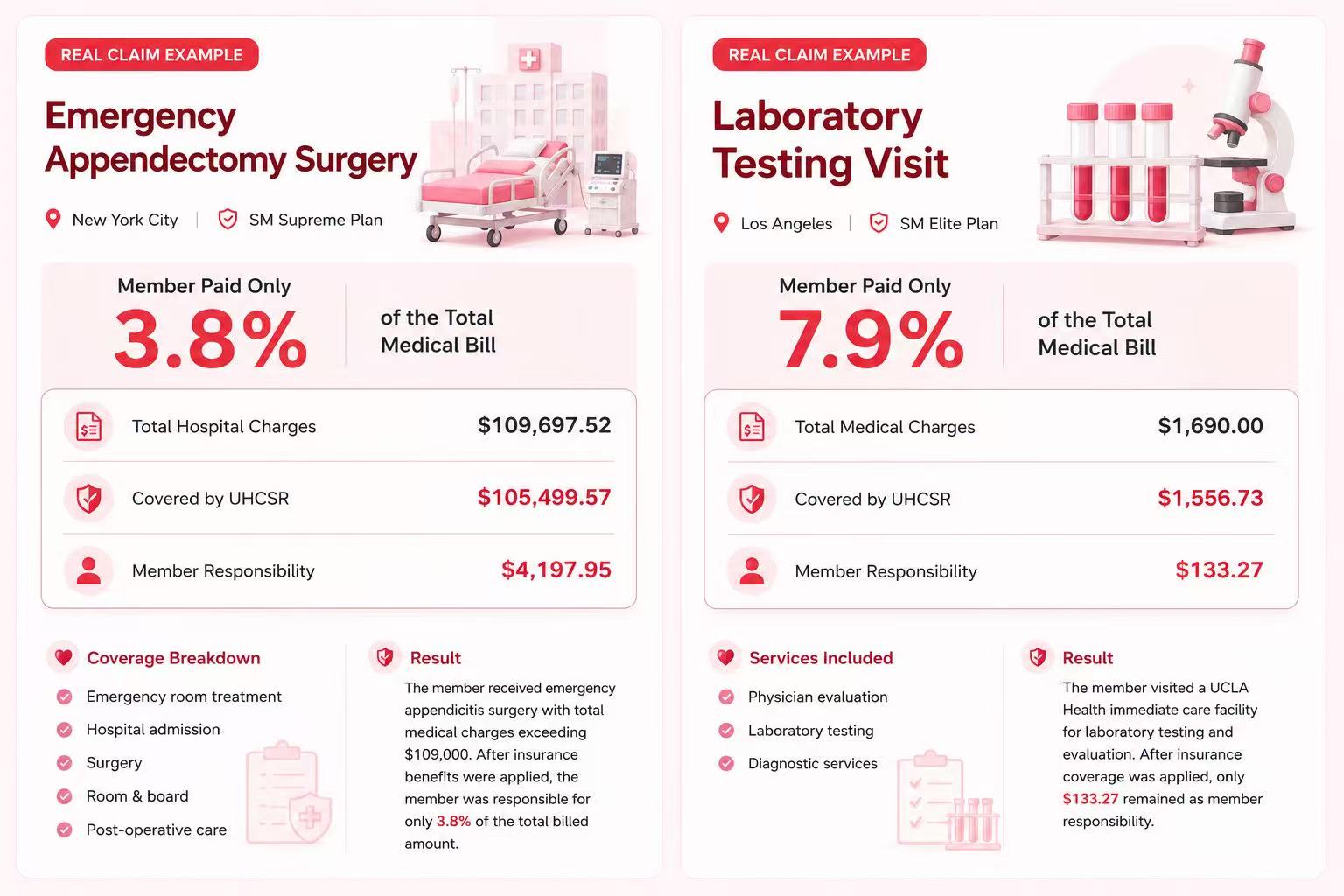
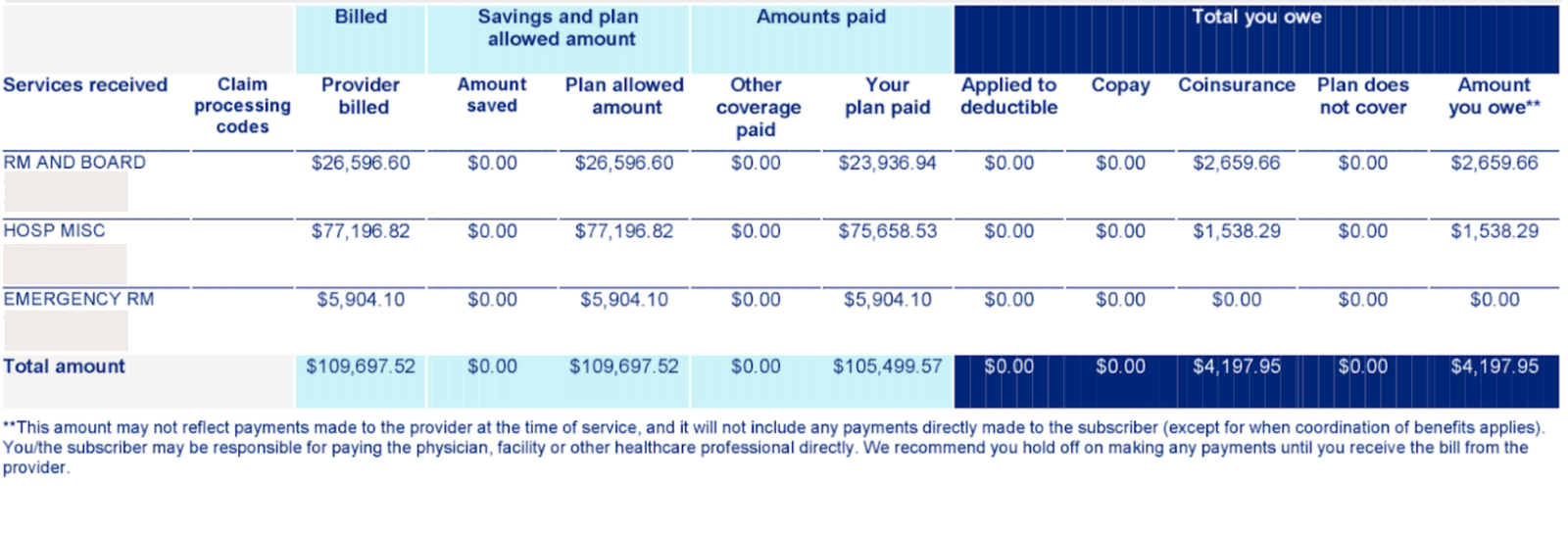
Appendectomy Surgery

A Student Medicover Supreme member in New York received emergency treatment and surgery for appendicitis. The total billed charges exceeded $100,000, and the majority of eligible expenses were covered through the health plan. The student's responsibility represented only a small percentage of the total billed amount.

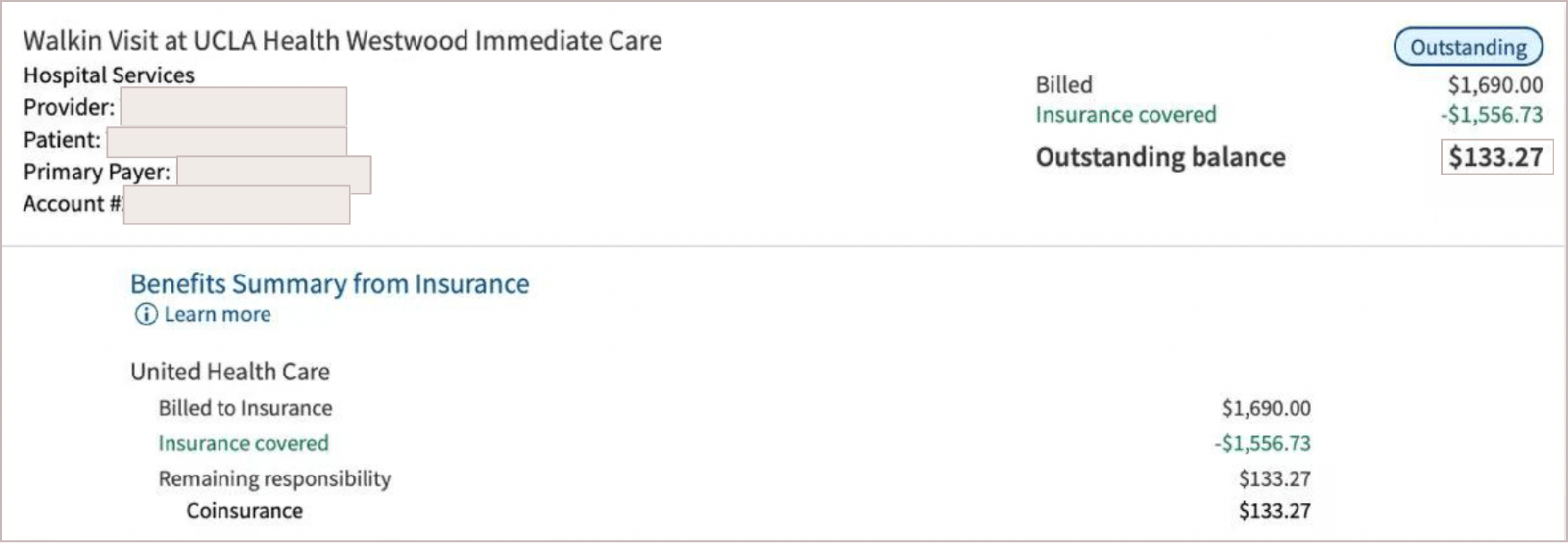
Laboratory Testing

Another Student Medicover Elite member received laboratory testing services in Los Angeles. The total charges exceeded $1,600, most eligible expenses were covered, and the student's remaining responsibility was limited.

Actual coverage varies by plan, provider network, location, medical service, and individual circumstances. Students should review the plan brochure and Certificate of Coverage for complete benefit details.

real-examples-of-how-coverage-can-help
real EOB appendectomy-surgery-example
real EOB laboratory-testing-example

Enrollment and Renewal for the 2026–2027 Academic Year

Enrollment and renewal are now available for the 2026–2027 academic year.

Current members can Log Into their Student Medicover accounts to renew coverage. New students can review available plan options and enroll online through the Student Medicover website .

Because many universities receive a high volume of waiver submissions close to semester deadlines, students are encouraged to complete enrollment and prepare waiver documentation as early as possible.


Referral Program

The Student Medicover referral program is also available for the 2026–2027 academic year. Eligible members can invite friends to enroll using their personal referral code. When a referred friend enrolls successfully, both parties may receive referral rewards according to the program terms.

  1. Visit the Student Medicover referral program page .
  2. Log in to the Student Medicover account to access a personal referral code.
  3. Share the referral code with friends who plan to enroll.

Referral reward eligibility, amount, and timing are subject to the official referral program terms and conditions.


About Student Medicover

Student Medicover is an international student health insurance provider serving students across the United States. Working alongside UnitedHealthcare Student Resources, Student Medicover offers affordable health insurance options, healthcare navigation assistance, multilingual support, and access to nationwide provider networks.

Student Medicover supports students from more than 130 countries and has helped more than 500,000 international students access healthcare while studying in the United States.


Student Medicover FAQ for International Students

The following questions are commonly asked by international students, parents, university staff, and prospective members when evaluating health insurance options in the United States.

Is Student Medicover a legitimate health insurance provider for international students?

Yes. Student Medicover has been serving international students in the United States for more than a decade and works with UnitedHealthcare Student Resources, one of the largest student health insurance administrators in the country.

Today, Student Medicover has supported more than 500,000 international students from over 130 countries and offers plans accepted by more than 1,500 U.S. colleges and universities.

Students can enroll online, access nationwide provider networks, manage claims through their member accounts, and receive multilingual customer support throughout their coverage period.

Is Student Medicover accepted by universities?

Student Medicover plans are accepted by many U.S. colleges and universities that allow students to waive their school-sponsored health insurance plan.

Acceptance depends on each school's insurance requirements and waiver policies. Students should always review their university's waiver requirements before enrollment.

Student Medicover provides waiver assistance and plan comparison resources to help students determine whether a plan may meet their school's requirements.

How does Student Medicover compare to university health insurance plans?

University health insurance plans often provide comprehensive coverage but may cost several thousand dollars per academic year.

Student Medicover offers alternative plan options designed specifically for international students, often at a lower premium while still meeting waiver requirements at many institutions.

Coverage details, deductibles, provider networks, and benefits vary by plan and school requirements, so students should compare options carefully before making a decision.

Does Student Medicover use UnitedHealthcare networks?

Many Student Medicover plans provide access to UnitedHealthcare provider networks, including Select Plus and Choice Plus PPO networks.

This allows eligible members to access a broad network of healthcare providers, hospitals, urgent care centers, specialists, and pharmacies across the United States.

Network availability depends on the specific plan selected.

Can Student Medicover be used to waive school health insurance?

In many cases, yes. Student Medicover offers plans specifically designed to satisfy waiver requirements at schools that permit alternative insurance coverage.

However, waiver approval is determined solely by the university and depends on whether the selected plan meets all required benefit criteria.

Students are encouraged to review school requirements and submit waiver applications as early as possible.

Does Student Medicover cover doctor visits and hospital services?

Coverage varies by plan, but eligible benefits may include primary care physician visits, specialist consultations, urgent care services, emergency room treatment, hospitalization, diagnostic testing, laboratory services, prescription drug coverage, and mental health services.

Students should review the plan brochure and Certificate of Coverage for complete benefit information.

Does Student Medicover offer telehealth services?

Yes. Many plans include access to telehealth services through HealthiestYou, allowing members to speak with licensed healthcare providers remotely.

Depending on the plan, students may receive virtual doctor visits, prescription assistance, mental health counseling, and care navigation support.

Telehealth availability may vary by state and plan.

How do claims work with Student Medicover?

Claims are generally administered through UnitedHealthcare Student Resources. For in-network providers, claims are often submitted electronically by the healthcare provider.

Students can typically view claim status online, review Explanation of Benefits documents, track claim processing progress, and contact Student Medicover support for assistance.

The actual reimbursement and claim processing experience depends on provider participation, plan benefits, and the details of the medical service.

Why do many international students choose Student Medicover?

International students often look for health insurance that balances affordability, university acceptance, provider network access, and customer support.

Common reasons students choose Student Medicover include access to UnitedHealthcare networks, competitive pricing compared with many university-sponsored plans, online enrollment and renewal, multilingual support, telehealth and wellness resources, waiver guidance, and healthcare navigation assistance.

The best insurance option ultimately depends on a student's university requirements, budget, healthcare needs, and personal preferences.